Introduction to MBBS
The journey, structure and purpose of India's undergraduate medical degree · from admission to a competent, ethical, lifelong-learning doctor.
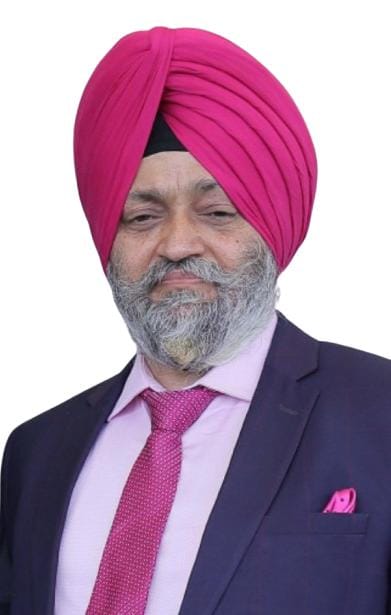
Prof. (Dr.) Rangeel Singh Raina
Your Presenter
Prof. (Dr.) Rangeel Singh Raina
Joint Director, Directorate of Medical Education, Uttarakhand
Professor of Pharmacology, GDMC Dehradun
🏛️ 17+ years in medical education & academic leadership
🩺 Former Principal / Dean, GMC Haridwar
🔬 Focus · pharmacovigilance & patient safety
01 · The Degree
What is MBBS?
Bachelor of Medicine & Bachelor of Surgery · India's primary undergraduate medical degree, regulated by the National Medical Commission.
02 · At a Glance
The MBBS Journey
Seven stages carry you from the entrance exam to a career of your own design · responsibility grows at every step.
Admission → Pre-clinical → Para-clinical → Clinical → Internship → Registration → Career
03 · Course Structure
Structure & Duration
Under the NMC CBME Curriculum 2024, the 4½ taught years form four phases · drawn to scale below.
04 · What You Study
Core Subjects, Phase by Phase
🧬 Phase I · the normal body
Pre-clinical
- Anatomy
- Physiology
- Biochemistry
+ Foundation Course, early clinical exposure & AETCOM.
🔬 Phase II · disease mechanisms
Para-clinical
- Pathology
- Pharmacology
- Microbiology
- Forensic Medicine
- Community Medicine
🩺 Phase III · caring for patients
Clinical
- Medicine & Surgery
- Obstetrics & Gynaecology
- Paediatrics
- Ortho, ENT, Ophthalmology
- Psychiatry, Derma & more
05 · Examinations
One University Exam Per Professional Year
Phase I
First Professional
- Anatomy
- Physiology
- Biochemistry
Phase II
Second Professional
- Pathology
- Microbiology
- Pharmacology
Phase III · Part I
Third Prof. (Part I)
- Community Med.
- Forensic Med. (FMT)
- ENT
- Ophthalmology
Phase III · Part II
Final Professional
- General Medicine
- General Surgery
- Obstetrics & Gynae.
- Paediatrics
Each exam = theory papers + practical / clinical + viva. Allied clinical subjects (Ortho, Anaesthesia, Radiodiagnosis, Psychiatry, Dermatology…) are taught & assessed within Phase III.
06 · Pass Criteria
How You Pass · The Rules
✅ Theory 40% · Practical 60%
Each subject's marks are weighted 40% Theory (papers + viva) and 60% Practical / Clinical; you must reach a 50% aggregate to pass.
📋 Internal assessment
Secure ≥ 50% in internal assessment (not below 40% in theory & practical each) to be eligible for the university exam.
🗓️ Attendance
≥ 75% in theory and ≥ 80% in practical / clinical training to sit the examination.
🔁 Attempts & progression
Up to 4 attempts per exam; the First Professional must be cleared within 4 years of admission. Pass a phase to progress.
Per NMC CBME / Graduate Medical Education Regulations · exact conduct may vary by university.
07 · How You Are Taught
Competency-Based Medical Education
CBME asks a better question than "how much do you know?"
Can you use what you know, safely and appropriately, for a patient?
Knowing the dose of adrenaline is not the same as managing anaphylaxis at 2 a.m.
Traditional
"How much do you know?" · recall, tested on paper.
Competency-based
"Can you do it, safely, for a patient?"
07 · The Backbone of CBME
Knows → Knows How → Shows How → Does
Written exams test the base of the pyramid.
OSCEs, log books, clerkships and internship test the top · what you can actually do.
The whole point of training is to move you upward, from knowing to doing.
08 · The Goal
The Goal: One Kind of Doctor
NMC's goal for MBBS · Competency-Based UG Curriculum
08 · The Indian Medical Graduate
Five Roles
🩺 Clinician · compassionate, holistic care
💬 Communicator · patients, families & community
🤝 Leader & team member · health data & systems
📚 Lifelong learner · always improving
⚖️ Professional · ethical & accountable
08 · Competency Structure
From Goal to Competencies
Goal → global competencies (aligned to the five roles) → the sub-competencies you are taught & assessed on · NMC Competency-Based UG Curriculum.
09 · Training Methods
How Doctors Are Trained
Your role changes as you climb. Knowledge is only the first step.
Learn → Observe → Practise → Perform under supervision → Take responsibility
10 · Internship
Where Responsibility Becomes Real
A 12-month supervised rotation through Medicine, Surgery, O&G, Paediatrics, Community Medicine and more.
Provisional → permanent registration on completion.
11 · After MBBS
Careers · The Path Branches Widely
PG specialisation is one excellent path, but it is not the only definition of success.
12 · Professional Development
Your degree makes you a doctor.
Your behaviour makes you a professional.
A degree is conferred once. Professionalism is demonstrated every day, and patients can only see your behaviour, never your marks.
13 · The Doctor You Become
MBBS teaches you medicine.
The journey teaches you to be a doctor.
Learn well
Listen carefully
Act ethically
Stay curious
Five years from today, what kind of doctor do you want your patients to remember?
Thank you
Remain human.
Learn well · Listen carefully · Act ethically · Stay curious
Prof. (Dr.) Rangeel Singh Raina · Sources: NMC · CBME 2024 · CRMI 2021